
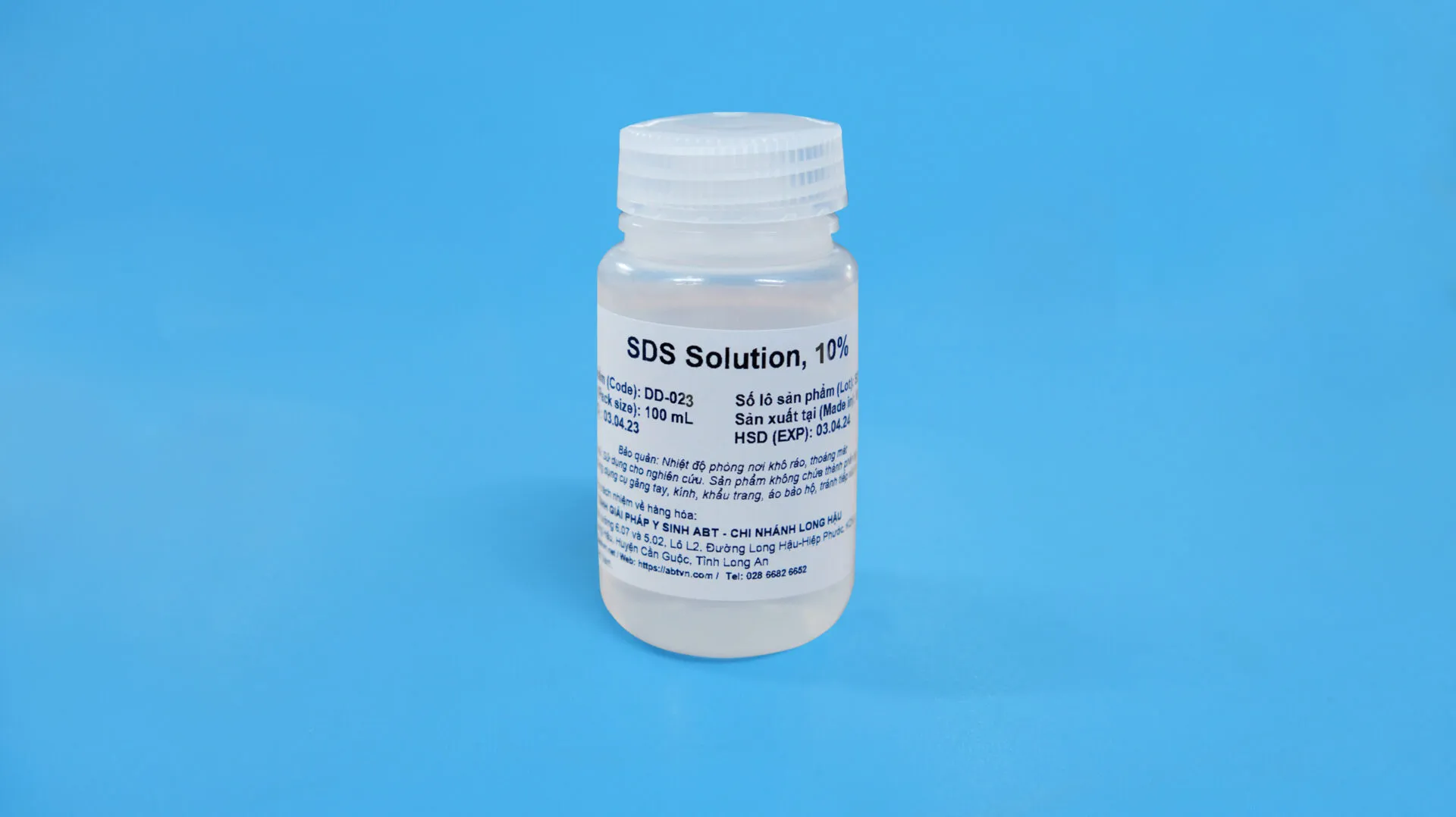

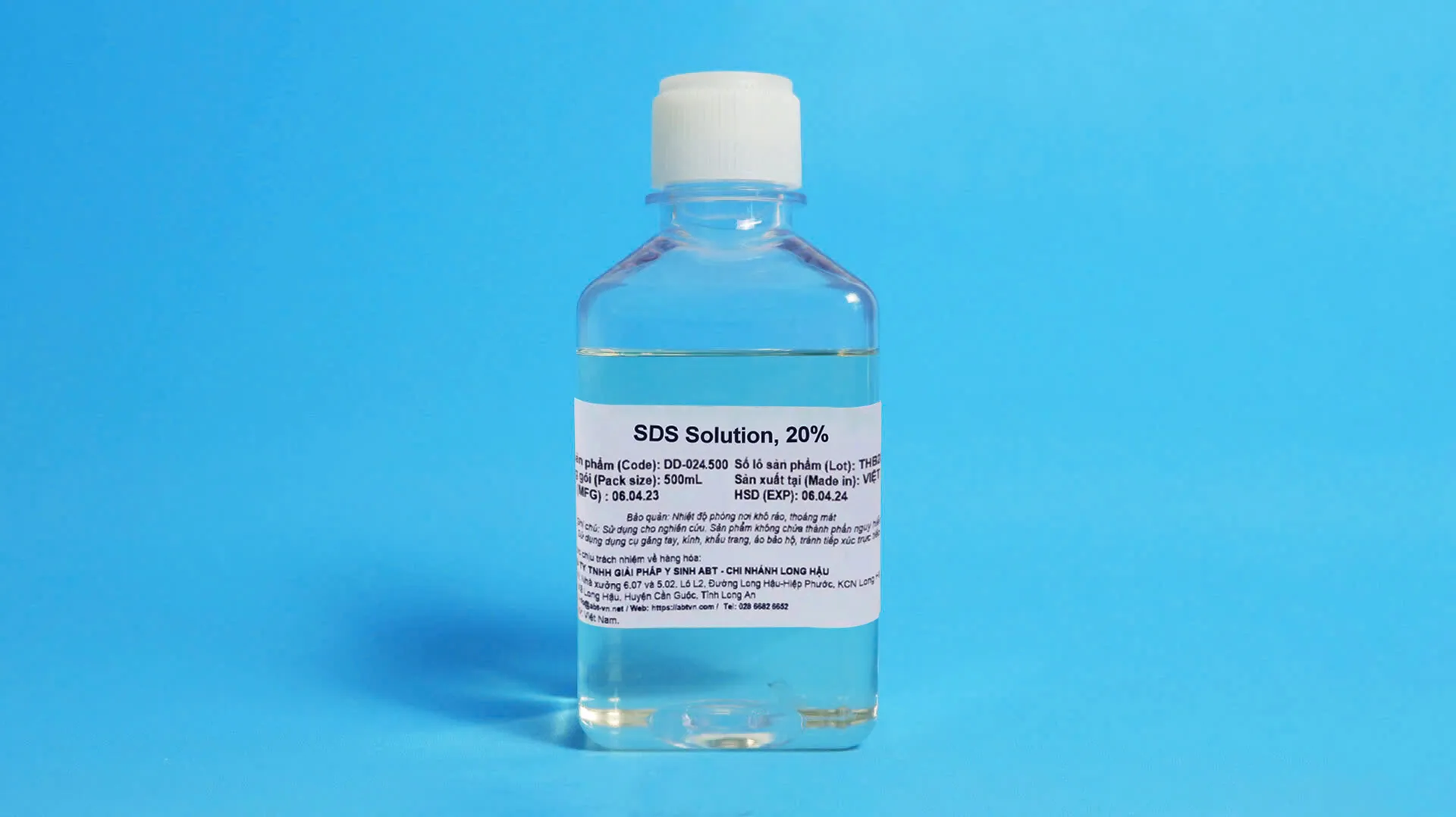
Specifications
- SDS Solution is sed in molecular biology, SDS-PAGE, and various procedures involving cell membrane disruption and protein denaturation.
- Surfactant (Detergent): Disrupts cell membranes to release proteins and nucleic acids.
- Protein denaturation: Breaks non-covalent bonds, eliminating tertiary and quaternary protein structures.
- Key component in SDS-PAGE: Facilitates separation of proteins based on molecular size. - Cell lysis agent: Used for extracting proteins or DNA/RNA from biological samples.
Product packaging
| Code | Product name | Packaging specification | Images |
| DD-023 | SDS Solution, 10% | 100ml Bottle |  |
| DD-024-100 | SDS Solution, 20% | 100ml Bottle |  |
| DD-024-500 | SDS Solution, 20% | 500ml Bottle | 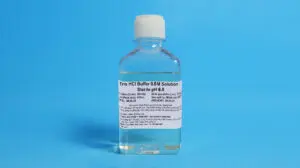 |
Manual instruction
SDS solution serves as a stock and is typically diluted to specific working concentrations depending on the application:
- SDS-PAGE: Final concentration typically ranges from 0.1% to 0.5%
- Cell lysis: Used at 0.5% to 2%, depending on the purpose
- Loading buffer: commonly contains 2% SDS
Measure the appropriate volume of 10% SDS stock to achieve the desired final concentration.
Example: To prepare 10 mL of 0.1% SDS solution, add 100 μL of 10% SDS stock.
Caution
- If crystallization occurs, gently warm the solution to 37–50°C. Do not boil the 10% SDS solution directly, as it may cause excessive foaming.
- Always wear gloves, a face mask, and protective goggles during handling.
- Immediately wash the affected area thoroughly with soap and clean water multiple times. Remove all contaminated clothing promptly. If you experience any discomfort, seek medical attention at the nearest healthcare facility.
- Do not use expired products.
Read more:



Reviews
There are no reviews yet.